LOW-COST HOMESTEADING GUIDE
How to Start a Homestead With No Money: 12 Practical Steps
You do not need acreage, a tractor, or a barn to begin homesteading. Many useful self-reliance habits can start with the home, tools, containers, and skills you already have.
Independent educational guide • Start before you have a budget • Build skills first
Quick Answer
You can start homesteading without a large upfront budget by using the home, tools, containers, storage, and skills you already have. Begin with free or low-cost improvements such as planning your space, growing one useful food, reducing waste, organizing pantry and water supplies, learning practical skills, and delaying expensive projects until you know exactly what your household needs.
Starting a homestead does not require buying acreage immediately, purchasing a tractor, building a barn, installing expensive off-grid systems, or buying animals on day one. Many useful homesteading habits can begin with ordinary household resources.
The goal is not to spend nothing forever — it is to start before you have a large budget. If you are completely new to homesteading, start with our beginner guide to how to start homesteading.
Can You Really Start a Homestead With No Money?
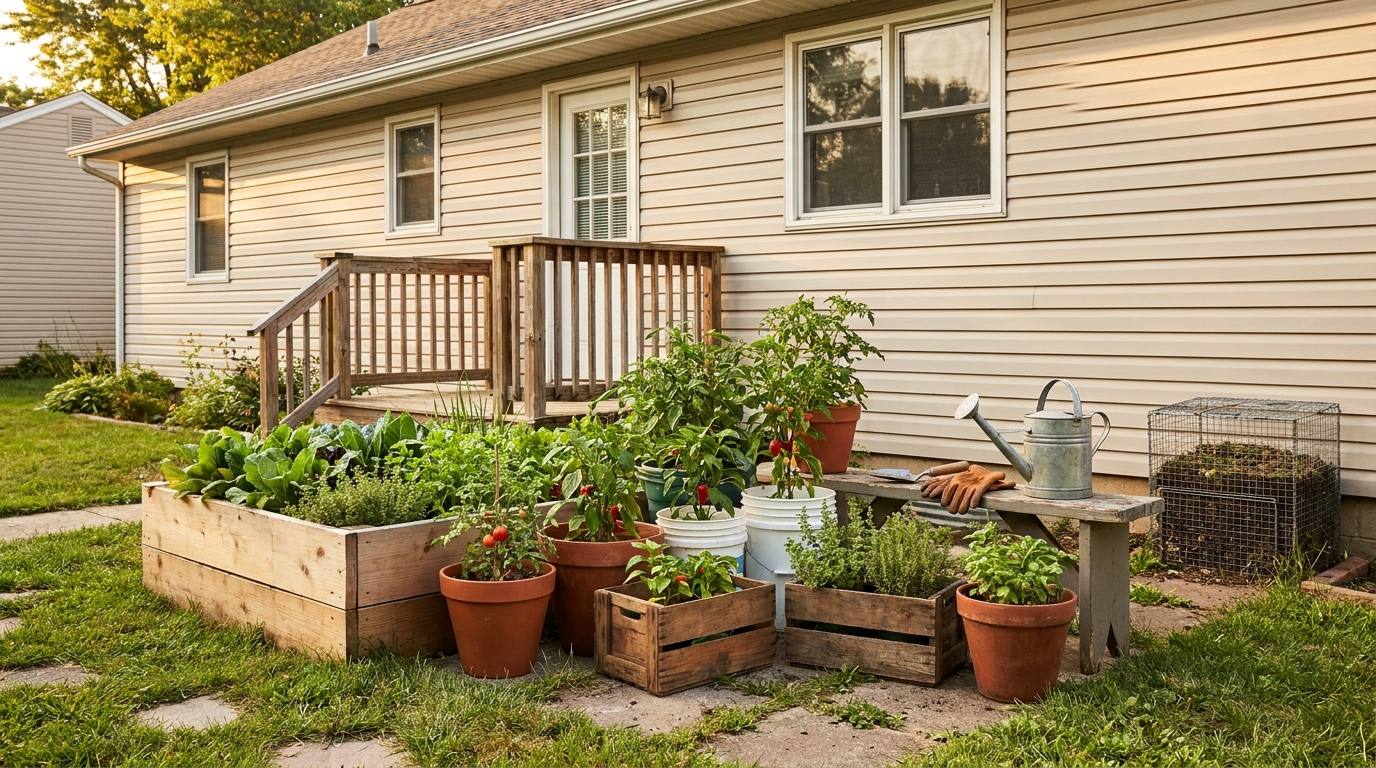
Yes, you can begin many homesteading habits with little or no new spending. But it is important to be honest: some projects eventually require money. Understanding the difference between starting homesteading and building a fully developed homestead helps you avoid frustration and unnecessary purchases.
Projects that are likely to involve cost as you scale up include livestock, fencing, greenhouse structures, wells, pumps, solar systems, major garden infrastructure, and large water tanks. These are not day-one purchases for most beginners.
Starting homesteading means building useful habits and skills. A fully developed homestead means having established infrastructure. They are not the same thing, and you do not need the second to begin the first.
How to Start a Homestead With Little or No Money
These twelve steps focus on low-cost or free actions you can take with resources you likely already have.
1. Start With an Inventory — Not a Shopping List
Before buying anything, write down what you already have. Inventory your available yard or patio space, sunlight, containers, shelving, tools, pantry supplies, water storage, gardening materials, household skills, and reusable materials. The cheapest useful item is often something already owned.
Before You Buy
2. Choose One Goal That Would Actually Help Your Household
Pick a single, specific goal rather than a broad ambition like "become completely self-sufficient." Useful examples include growing a few foods, reducing grocery waste, building a small pantry buffer, improving water preparedness, learning food preservation, starting a compost system, or reducing dependence on one household system.
3. Grow One Food Before Building a Big Garden
Start with beginner-friendly crops such as herbs, lettuce, tomatoes, peppers, green onions, or beans where suitable. Use existing containers, reused suitable food-safe containers, or a small existing garden area. Not every plant works in every climate, so choose something appropriate for your local growing conditions — the USDA Plant Hardiness Zone Map can help you identify what grows well in your area. If you are new to growing food, see our guide on how to start homesteading for more beginner context.
4. Save Seeds and Propagate Plants Carefully
Low-cost possibilities include saving appropriate seeds from open-pollinated plants, dividing perennial herbs, propagating suitable plants, and swapping seeds locally. Not every grocery-store seed or produce variety can be reliably saved — take time to understand plant variety and local growing conditions before relying on saved seeds.
5. Build a Pantry Buffer From Food You Already Buy
Do not buy a giant emergency stockpile. Instead, when budget allows, keep one extra replacement of several foods the household regularly consumes. Use first-in, first-out rotation — placing newer items behind older ones. This reduces waste and creates a modest buffer gradually, without a large one-time expense.
6. Improve Water Preparedness Before Buying a Large System
Start by knowing what household water is already stored, organizing containers, understanding safe storage practices, rotating stored water, and identifying realistic backup options. For a detailed breakdown, see our guide to emergency water supply for home. Keep this step high-level for now — untreated rainwater is not automatically safe to drink, and a large water system is rarely the best first purchase.
7. Turn Appropriate Household Waste Into a Resource
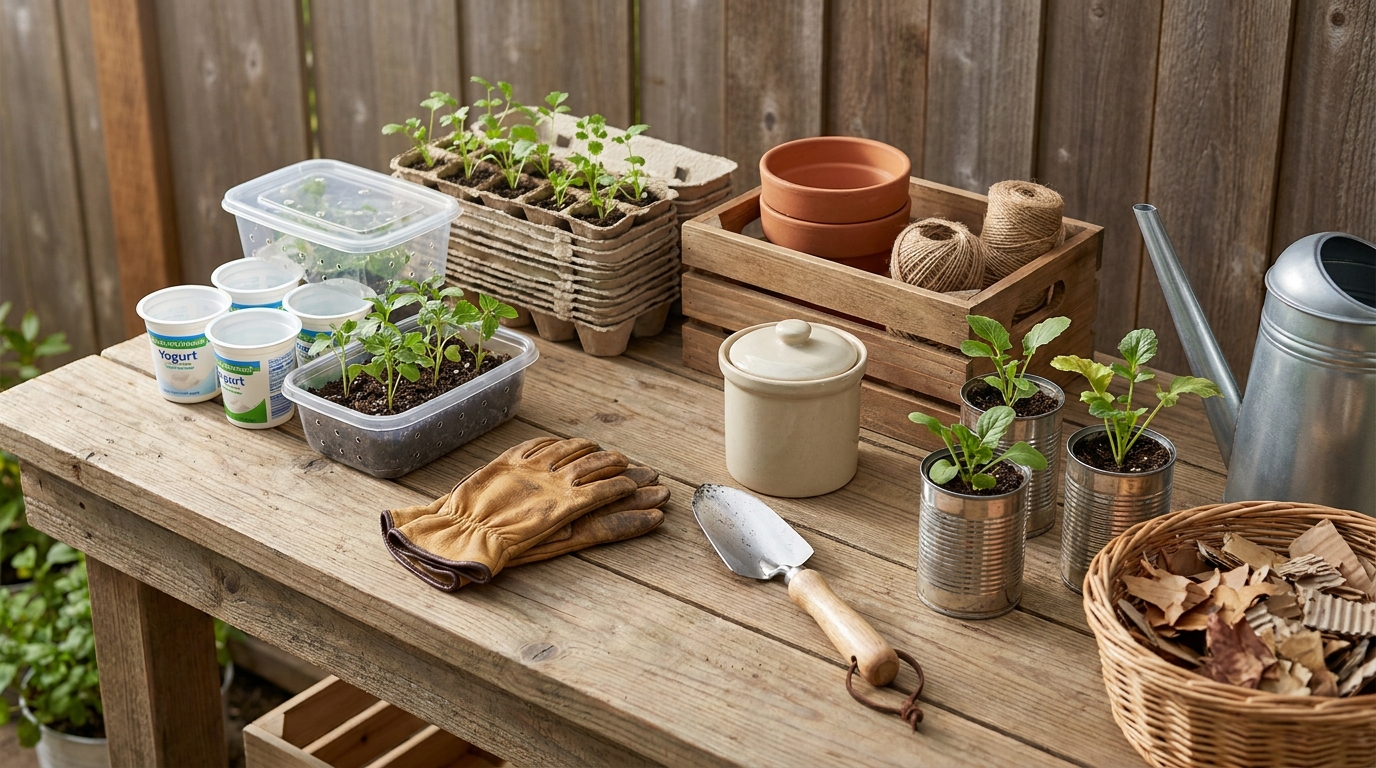
Compost appropriate kitchen scraps, save leaves for compost or mulch where appropriate, reuse suitable containers, reduce food waste, and repurpose safe household materials. Do not reuse chemical containers, contaminated materials, or unsuitable plastics for food or water use.
8. Learn Skills Before Buying Equipment
Useful skills include seed starting, basic gardening, composting, pantry rotation, simple repairs, cooking from basic ingredients, safe food preservation using authoritative guidance, and water planning. Knowledge often produces more long-term value than buying gear you do not yet know how to use.
9. Look for Free or Low-Cost Materials Responsibly
Possible sources include local Buy Nothing groups, community swaps, neighbors, local gardening groups, reuse centers, legitimate free-material listings, and plant or seed swaps. Always obtain materials with permission and verify they are safe for their intended use. Do not take materials without permission, trespass, remove illegal dump waste unsafely, use chemically treated pallets for food-growing applications, or use unknown chemical containers.
10. Use the Library and Free Education Before Buying Courses
Public library books, local extension resources, government gardening resources, community gardening programs, and reputable educational guides can help you identify what kind of project actually makes sense before you spend money. Use free education to understand your needs first.
11. Delay Animals and Expensive Infrastructure
Beginners often imagine chickens, goats, bees, large greenhouses, wells, solar systems, tractors, and large storage structures. These can involve ongoing costs, permits, maintenance, daily animal care, zoning restrictions, and specialized knowledge. Master simpler systems first and add animals or major infrastructure only when you are confident you can maintain them.
12. Reinvest Savings Into the Next Useful System
If growing food, reducing waste, repairing instead of replacing, or improving pantry planning saves some household money, that money can gradually fund the next useful project. A simple progression might be: containers and herbs first, then a small garden, then better storage, then one larger project. This is not a guarantee of savings — it is a practical way to reinvest when efficiencies do occur.
7 Things You Probably Don't Need to Buy First
These items may eventually be useful — they are simply rarely the best first purchase for a beginner with a limited budget.
- 1Large greenhouse
- 2Tractor
- 3Expensive solar system
- 4Large livestock setup
- 5Huge emergency food stockpile
- 6Every gardening tool at once
- 7Large water system before understanding actual needs
10 Homesteading Projects You May Be Able to Start for Free
These are free or nearly free depending on what you already own. Not every reader can complete all ten for exactly $0, but most require no new purchases.
- 1Property inventory
- 2Pantry organization
- 3Food-waste audit
- 4Compost setup using an existing suitable container
- 5Herb propagation
- 6Seed inventory
- 7Water-storage inventory
- 8Emergency lighting inventory
- 9Learn one repair skill
- 10Create a 30-day homesteading plan
A Simple Homesteading Budget Ladder
Move up the ladder only when a project solves a real household need.
Level 1 — Use What You Have
- Inventory
- Organization
- Skills
- Planning
- Waste reduction
Level 2 — Small Low-Cost Projects
- Seeds
- Containers
- Basic gardening supplies
- Pantry buffer
- Simple storage improvements
Level 3 — Projects That Require Planning
- Raised beds
- Larger water storage
- Food preservation equipment
- Chickens
- Greenhouse
Level 4 — Major Systems
- Wells
- Large solar systems
- Major structures
- Large livestock infrastructure
- Whole-property water systems
FREE INTERACTIVE TOOL
Not Sure What Your First Project Should Be?
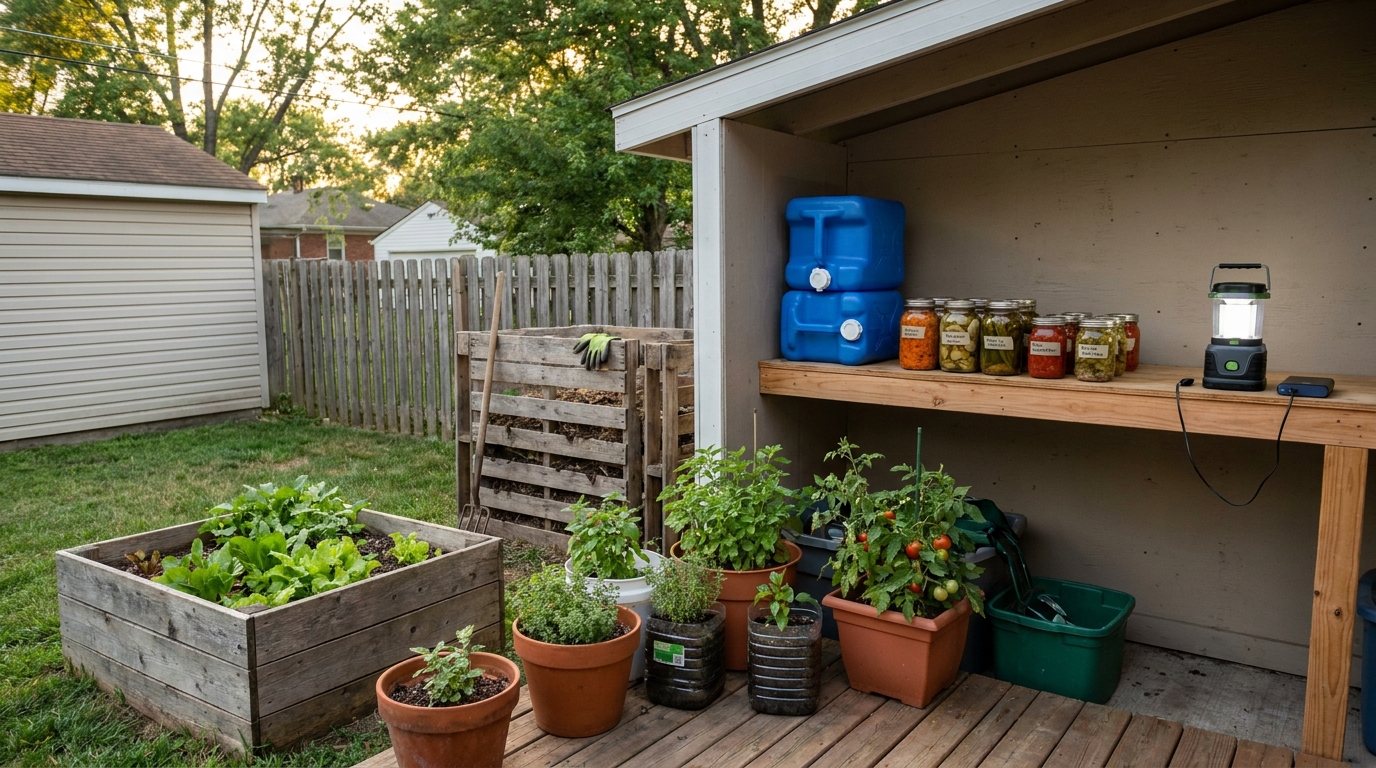
Assess your food, water, energy, storage, and practical skills before spending money on another project. The free 10-Minute Backyard Self-Reliance Checklist identifies your strongest and weakest areas and gives you a personalized place to start.
Take the Free 10-Minute Backyard Self-Reliance Checklist →- ✓Identify your strongest and weakest areas
- ✓Get a personalized place to start
- ✓Unlock the interactive checklist + printable workbook
Can You Start Homesteading Without Owning Land?
Yes, many homesteading skills can begin without acreage. Container gardening, herbs, food preservation, cooking, pantry planning, composting where appropriate, community gardening, practical household skills, and emergency preparedness are all accessible to renters and apartment dwellers. If you rent, do not make property alterations without landlord permission.
Common Budget Homesteading Mistakes
- Buying tools before choosing a project
- Starting too many projects at once
- Confusing cheap with safe
- Using questionable reclaimed materials without understanding their history
- Ignoring ongoing maintenance costs
- Taking on animals too early
- Buying land before understanding what type of homestead is actually wanted
- Believing every DIY solution automatically saves money
Want More Homesteading Project Ideas in One Place?
Free information is enough for many individual projects. Some readers, however, prefer having a broader collection of food, water, backyard, storage, and DIY project ideas organized together. For those readers, Wellness Vital Tips has reviewed The Self-Sufficient Backyard.
Read Our Self-Sufficient Backyard Review →Safety Considerations
Frequently Asked Questions
Can you really start a homestead with no money?
You can begin many homesteading habits with little or no new spending by using resources you already have, learning skills, organizing household systems, and choosing small projects. Larger systems such as livestock, structures, wells, and solar equipment eventually require a budget.
How do I start homesteading if I'm broke?
Start with an inventory rather than a shopping list. Focus on free or inexpensive improvements such as growing one food, reducing waste, organizing pantry and water supplies, learning practical skills, and postponing expensive infrastructure.
What is the cheapest way to start homesteading?
The cheapest approach is usually to use the space and materials you already have, choose one useful project, learn the necessary skill first, and expand gradually instead of purchasing many systems at once.
Can I homestead without owning land?
Yes. Many homesteading skills can begin in an apartment, rental, patio, or small home through container growing, food preparation, pantry planning, practical skills, and community gardening where available.
Should I buy chickens when starting a homestead?
Not necessarily. Chickens require housing, food, daily care, ongoing expenses, and compliance with local rules. Beginners may benefit from mastering simpler household and gardening systems first.
What should I buy first for a homestead?
Before buying anything, identify your first practical goal. For many beginners, a small amount of gardening equipment, pantry organization, safe water storage, or supplies for one specific skill may be more useful than expensive infrastructure.
Related Guides
How to Start Homesteading
A beginner's guide to homesteading with the home and space you already have — 10 practical steps for food, water, storage, skills, and energy.
Read morePreparedness & Healthy Home
Practical guides for household water, backup resources, healthy-home systems, and everyday preparedness.
Read moreEmergency Water Supply for Home
Storage containers, rotation, treatment, filtration, and building a practical household backup plan.
Read moreThe Self-Sufficient Backyard Review
An independent editorial review of a popular homesteading and self-reliance guide.
Read more