PREPAREDNESS & HEALTHY HOME
Preparedness & Healthy Home: Practical Guides for a More Resilient Household
Practical, evidence-informed guides to help you think through household water, backup resources, healthy-home systems, and everyday preparedness without fear-based hype.
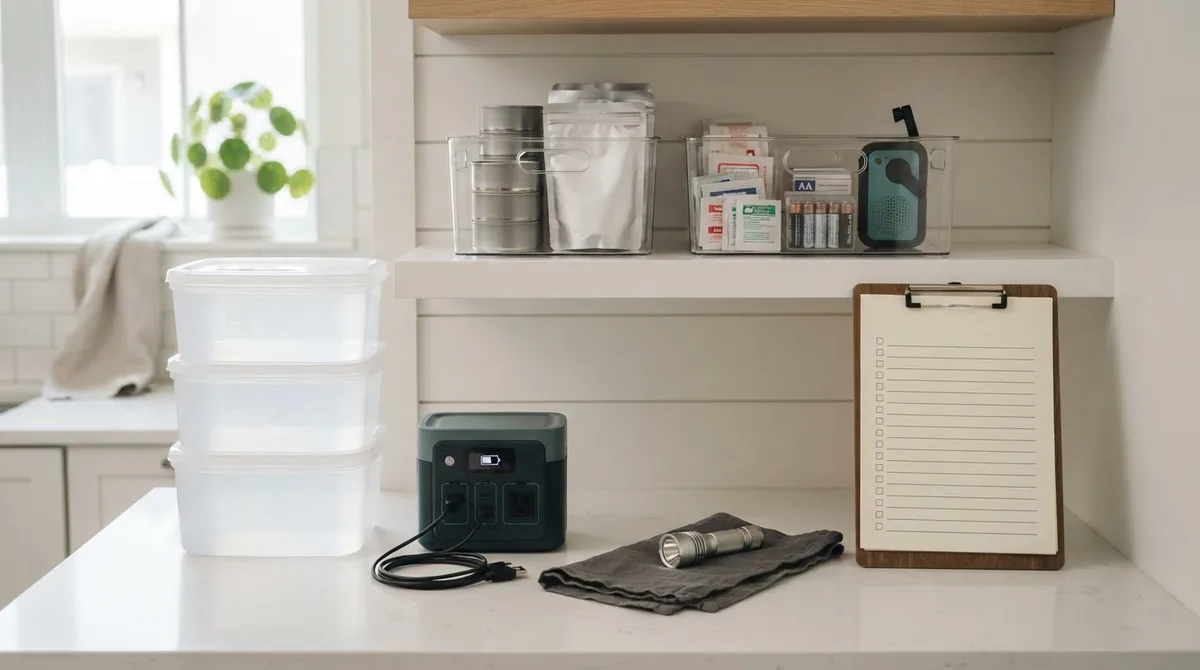
Household preparedness is not about predicting disasters or creating fear. It is about understanding basic household needs and having reasonable backup options when normal systems are interrupted — whether that means a short power outage, a water supply disruption, or a longer emergency.
A practical approach to preparedness is layered. Rather than depending on a single solution, a resilient household builds redundancy across several areas: stored essentials, treatment and safety capability, alternative sources, backup power and equipment, and a clear household response plan. Each layer reinforces the others, so that if one part falls short, the rest still provide value.
Water is currently the most developed topic within this category, and it is where Wellness Vital Tips has built the deepest collection of guides. Over time, this section will expand to cover other healthy-home subjects — including indoor air quality, filtration, backup power, and home environmental monitoring. The goal is the same throughout: practical information that helps you make more informed decisions, without exaggeration or alarm.
Start With the Essentials: A Layered Preparedness Plan
A resilient household does not rely on any single solution. These five layers work together so that gaps in one area are covered by another. Federal preparedness resources such as Ready.gov preparedness guidance also recommend planning ahead and keeping essential emergency supplies available.
Stored Water & Essentials
A reserve of clean water and basic supplies kept before any disruption occurs. This is your most reliable immediate resource and the foundation of any household plan.
Treatment & Safety
The ability to filter, disinfect, or otherwise make water from any source safer to use. Treatment capability matters as much as storage, because alternative sources may not be automatically safe.
Alternative Sources
Backup ways to obtain water when stored supplies run low. Options may include rainwater collection, wells, or atmospheric water generation, depending on your location and circumstances.
Backup Power & Equipment
Plans for how essential equipment would operate during a power interruption. This includes backup power options, manual alternatives, and knowing what truly needs electricity to function.
Household Response Plan
A clear plan covering who does what, how resources are managed, and how the plan is practiced before it is needed. A written plan reduces confusion during stressful situations.
Stored Essentials
Water and basic supplies kept before any disruption
Treatment & Safety
Filtration and disinfection capability
Alternative Sources
Rainwater, wells, atmospheric generation
Backup Power & Equipment
Power options for essential devices
Household Response Plan
Clear roles, rationing, and practice
Water Preparedness
Water planning is the most developed area of our preparedness coverage. A practical water plan can include stored water, treatment capability, alternative sources, household calculations, and off-grid options. The guides below walk through each of these topics in detail.
More Water Guides
Atmospheric Water Generator for Home
Practicality, humidity, power, noise, maintenance, cost, and buying considerations for residential AWG use.
Read the guideHow to Make Water From Air
Condensation, dew collection, desiccants, fog collection, and the science behind capturing moisture from air.
Read the guideOff-Grid Water System
Sources, storage, pumping, treatment, solar power, and backup for a home or cabin off the grid.
Read the guideEmergency Water Supply for Home
Storage containers, rotation, treatment, filtration, and building a practical household backup plan.
Read the guideHow Much Backup Water Does Your Household Need?
There is no single answer that fits every household. Water needs vary based on several factors:
- Household size: More people means more daily water usage.
- Duration: Planning for three days differs from planning for two weeks.
- Climate: Hot or dry conditions increase drinking-water needs.
- Medical or personal needs: Some household members may have additional requirements.
- Pets: Animals need water too, and their needs add up.
- Cooking and sanitation: Water is not only for drinking — it is also needed for food preparation and basic hygiene.
Rather than relying on a generic estimate, the most useful approach is to calculate a target based on your actual household. That is exactly what our free planner is designed to do. For a complete walkthrough, see our guide to building an emergency water supply for home — covering storage, containers, rotation, treatment, and household planning.
FREE INTERACTIVE TOOL
Build Your 14-Day Family Water Backup Plan
Calculate a personalized household water target, compare it with what you currently have stored, identify your planning gap, and build a practical action plan.
Build My Free Water Plan →- Household water target
- Current water-gap calculation
- Water Readiness Score
- Storage planning
- Treatment planning
- Backup-source planning
- Personalized action steps
Alternative Water Sources
Alternative water planning may involve several approaches depending on your location, climate, and circumstances. No single source is right for every household, and most resilient plans combine more than one.
- Stored municipal water: The simplest backup — clean water kept in food-safe containers before it is needed.
- Rainwater collection: Where legally permitted and practical, rainwater can supplement stored supplies. Local regulations vary, so check what applies in your area.
- Wells: A private well can provide water independent of municipal systems, though it may require power for pumping.
- Atmospheric moisture: Water can be extracted from air using commercial or DIY atmospheric water generation. Output depends heavily on humidity, temperature, and system design.
- Other emergency sources: In some situations, water heaters, toilet tanks (not bowls), and other in-home reservoirs may provide short-term supply.
Water Safety Matters
For a detailed look at one alternative-source approach, see our guide: DIY Atmospheric Water Generator. For a broader look at the different methods, see our guide on how to make water from air.
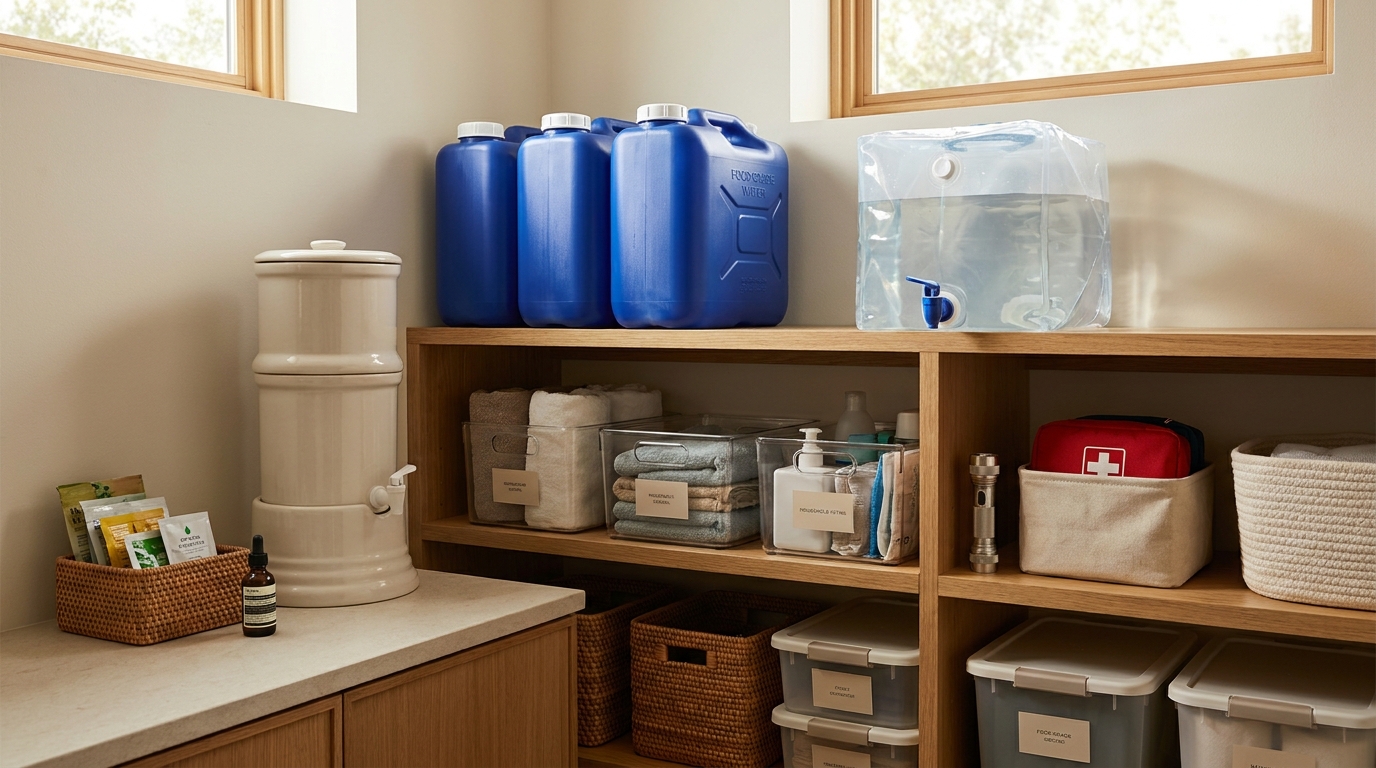
Off-Grid Water & Backup Systems
Off-grid and backup water systems add another layer of resilience by reducing dependence on a single utility. Practical considerations in this area include:
- Water tanks and storage sizing
- Pumps and gravity-fed systems
- Filtration for non-municipal water
- Solar power and battery backup for water equipment
- Water-source redundancy — combining multiple approaches
Learn more in our complete guide: off-grid water system — covering sources, storage, pumping, treatment, solar power, and backup options for a home or cabin.
Healthy Home Systems
Preparedness extends beyond emergency water. A healthier, more resilient home also involves the systems that shape your everyday environment. These are future content areas we are planning to explore.
Water Filtration
Indoor Air Quality
Air Purifiers
Humidifiers & Dehumidifiers
Emergency Power
Home Environmental Monitoring
A Practical Preparedness Checklist
Use this checklist as a starting point. You do not need to do everything at once — work through it gradually and revisit it periodically.
- Know your household's basic water target
- Know what water you currently have stored
- Use appropriate, food-safe storage containers
- Understand basic water-treatment options
- Identify at least one alternative water source
- Consider how important equipment would operate during a power interruption
- Keep essential instructions and contact information accessible
- Review and update the plan periodically
- Consider needs of children, older adults, pets, and household members with special requirements
OUR APPROACH
Preparedness Without the Hype
Wellness Vital Tips does not believe preparedness content needs exaggerated disaster predictions or fear-based messaging. The goal is simpler and more practical: understand the risks that are relevant to your household, know your options, make reasonable preparations, and use reliable information to guide your decisions.
We also believe in avoiding dependence on any single solution. No one method — whether stored water, filtration, atmospheric generation, or anything else — is perfect for every situation. A layered plan that combines several approaches is more resilient than relying on one.
As this category grows, we will continue to add guides that treat preparedness as a practical, everyday topic — not a source of anxiety.
Frequently Asked Questions
What should a basic household preparedness plan include?
A basic plan should cover stored water and essentials, treatment capability, at least one alternative water source, a plan for power interruptions, and a written household response plan. The goal is to understand your needs and have reasonable backup options — not to prepare for every possible scenario at once.
How much emergency water should a household store?
Water needs vary based on household size, duration of planning, climate, cooking and sanitation needs, pets, and any medical or personal requirements. Rather than relying on a single generic number, use a planning tool to calculate a target that reflects your specific household. Our free 14-Day Family Water Backup Planner can help with this.
What are good backup sources of water?
Common backup sources include stored municipal water, rainwater collection where legally permitted, private wells, and atmospheric water generation. Each source has different requirements for treatment, equipment, and legal considerations. No single source is ideal for every household, which is why a layered approach is recommended.
Can atmospheric water generation be part of an emergency water plan?
Atmospheric water generation can potentially serve as one alternative source within a broader emergency water plan. However, output depends heavily on humidity, temperature, power availability, and system design. It should be viewed as a supplemental option rather than a guaranteed standalone supply, and collected water requires appropriate treatment and testing.
How should emergency water be stored?
Store water in food-safe, clean containers kept away from heat and direct sunlight. Seal containers to prevent contamination, label them with the storage date, and rotate stored water regularly. Containers should be sanitized on a regular schedule, and stored water should be treated and tested before consumption if there is any doubt about its quality.
Does backup water need to be treated?
Water from any alternative source should not automatically be assumed safe to drink. Treatment — which may include filtration, disinfection, or both — and water-quality testing are important if water is intended for consumption. Follow applicable public-health guidance and manufacturer instructions for any treatment products you use.
How often should a household preparedness plan be reviewed?
A preparedness plan should be reviewed periodically — for example, every six to twelve months, or whenever your household circumstances change. Check that stored water is rotated, equipment still works, contact information is current, and the plan still reflects your household's actual needs.
What should you consider when planning for a power outage?
Consider which equipment needs electricity to function, how long backup power would need to last, and whether manual alternatives exist. Think about water treatment devices, medical equipment, communication tools, and lighting. Having a written plan for power interruptions reduces uncertainty and helps you prioritize what matters most.
Start With the Part of Your Plan You Can Measure Today
Use the free planner to calculate your household water target, identify your current gap, and build a practical 14-day backup plan.
Start My Free Water Plan →