BEGINNER HOMESTEADING GUIDE
How to Start Homesteading: 10 Practical Steps for Beginners
You do not need a farm, many acres, or a complete off-grid setup to start homesteading. This guide walks through practical first steps you can take with the home and backyard you already have.
Independent educational guide • Start small • Build skills before complexity
Quick Answer
To start homesteading, begin with the home and space you already have. Assess your property, choose one useful food-growing project, improve your water and pantry systems, learn one practical skill, and add new projects gradually instead of trying to build a complete homestead at once.
Homesteading does not require buying a farm, owning many acres, quitting a normal lifestyle, becoming completely off-grid, or doing everything yourself. Modern homesteading can simply mean becoming more capable at home — growing some food, improving water preparedness, preserving or storing food, reducing waste, learning useful household skills, and creating practical backup systems.
The key is to start small, use what you already have, build skills before adding complexity, and finish one useful system before moving to the next. This guide breaks the process into ten practical steps that work for an ordinary suburban home or small backyard.
What Does Homesteading Mean Today?
Modern homesteading exists on a spectrum. It does not have to mean complete independence from every outside system. For many households, homesteading is simply a collection of practical skills and projects that make the home more productive and resilient.
Examples range widely depending on your space, interests, and local rules:
- Herbs on a patio or balcony
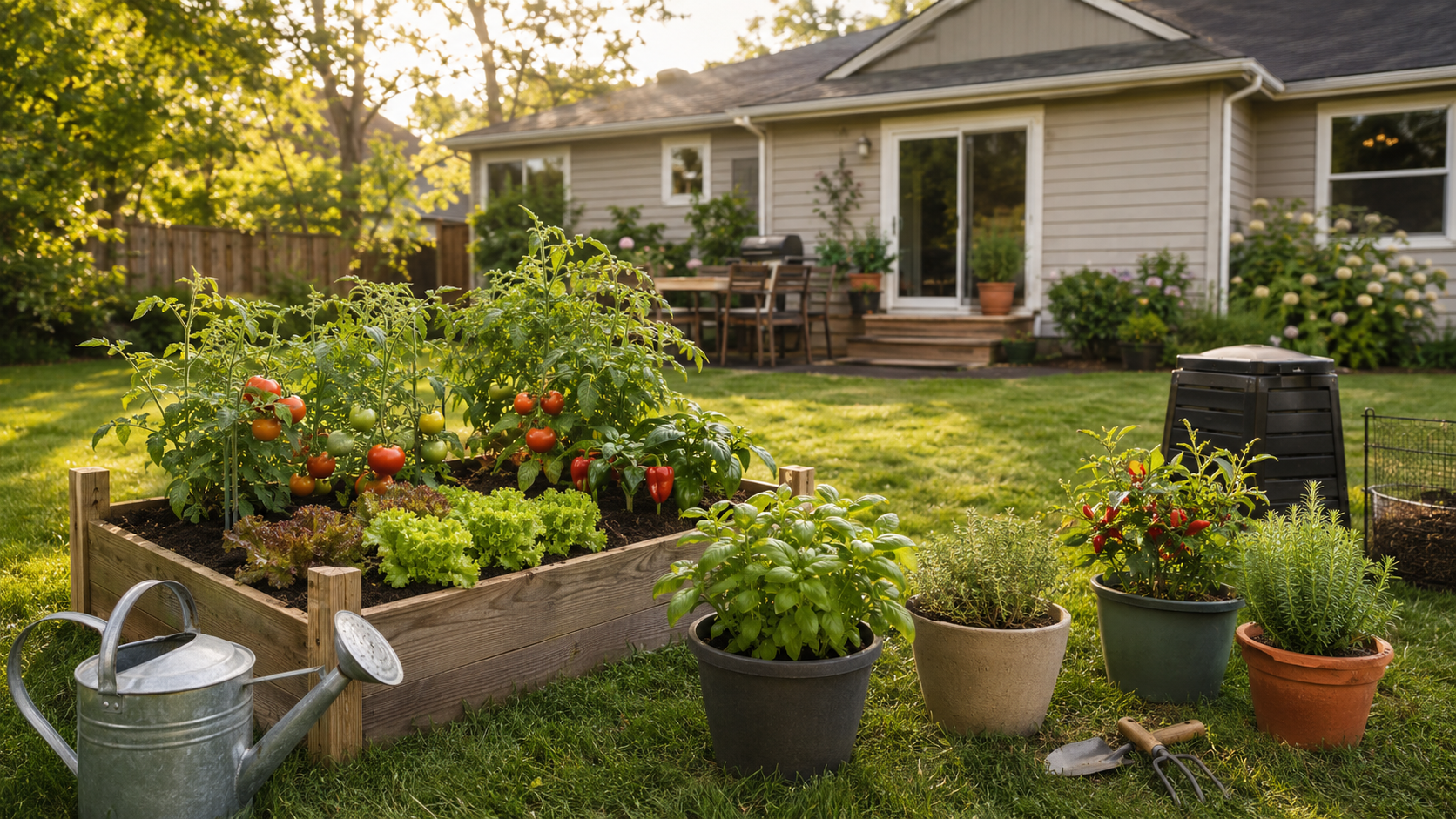
- Raised-bed gardening in a backyard
- Composting kitchen scraps
- Cooking more meals from scratch
- Building a small pantry buffer
- Food preservation using authoritative safety guidance
- Backyard chickens where legally allowed
- Rainwater use where legally permitted
- Household preparedness and backup energy
- Practical DIY and repair skills
The common thread is not acreage or self-sufficiency — it is the deliberate choice to become more capable and less dependent on systems you do not control.
Can You Start Homesteading With a Small Backyard?
Yes. Acreage affects what is possible, but beginners can build useful homesteading skills with a backyard, patio, balcony, or small suburban property. Focus on productivity and practical skills rather than the size of your land.
Container gardens, raised beds, herb planters, composting bins, and pantry organization all work in small spaces. The goal is not to produce everything your household consumes — it is to build skills and systems that make your home a little more self-reliant each year.
Not sure where your household should start?
Take the free 10-minute Backyard Self-Reliance Checklist to assess food, water, energy, storage, and practical skills — and get a personalized place to begin.
Take the Free Checklist →How to Start Homesteading: 10 Beginner Steps
Work through these steps one at a time. Each one builds on the last, and none of them require buying land or making a major lifestyle change.
1. Decide What Self-Reliance Means for Your Household
Before building anything, ask what you actually want. Is it fresh food, fewer grocery dependencies, emergency preparedness, useful skills, a productive backyard, lower waste, or more household resilience? Choose two or three priorities rather than copying someone else's homestead.
2. Assess the Home and Property You Already Have
Look at your sunlight, available growing space, storage areas, water access, climate, existing equipment, HOA restrictions, zoning rules, and available time. You do not need to buy land before starting — you need to understand what your current property can support.
3. Grow One Food Your Household Actually Eats
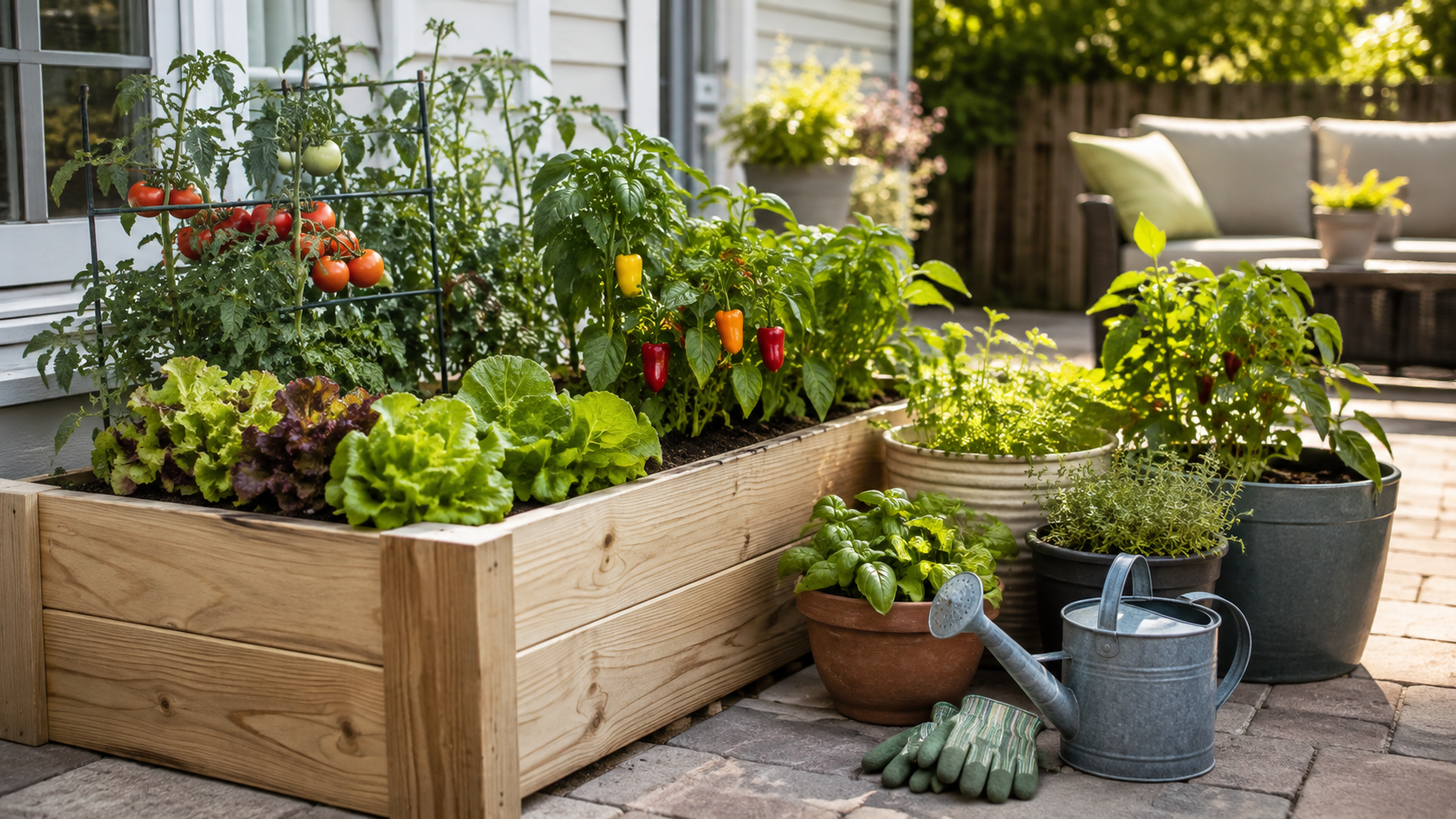
Begin with a small number of useful crops — herbs, lettuce, tomatoes, peppers, beans, or berries where suitable. Growing familiar foods improves the chance that the project will be maintained, because the harvest is something your household already enjoys. Not all crops grow in all climates, so choose varieties suited to your region — the USDA Plant Hardiness Zone Map is a useful starting reference for understanding what grows well where you live.
4. Build a Small Pantry Buffer
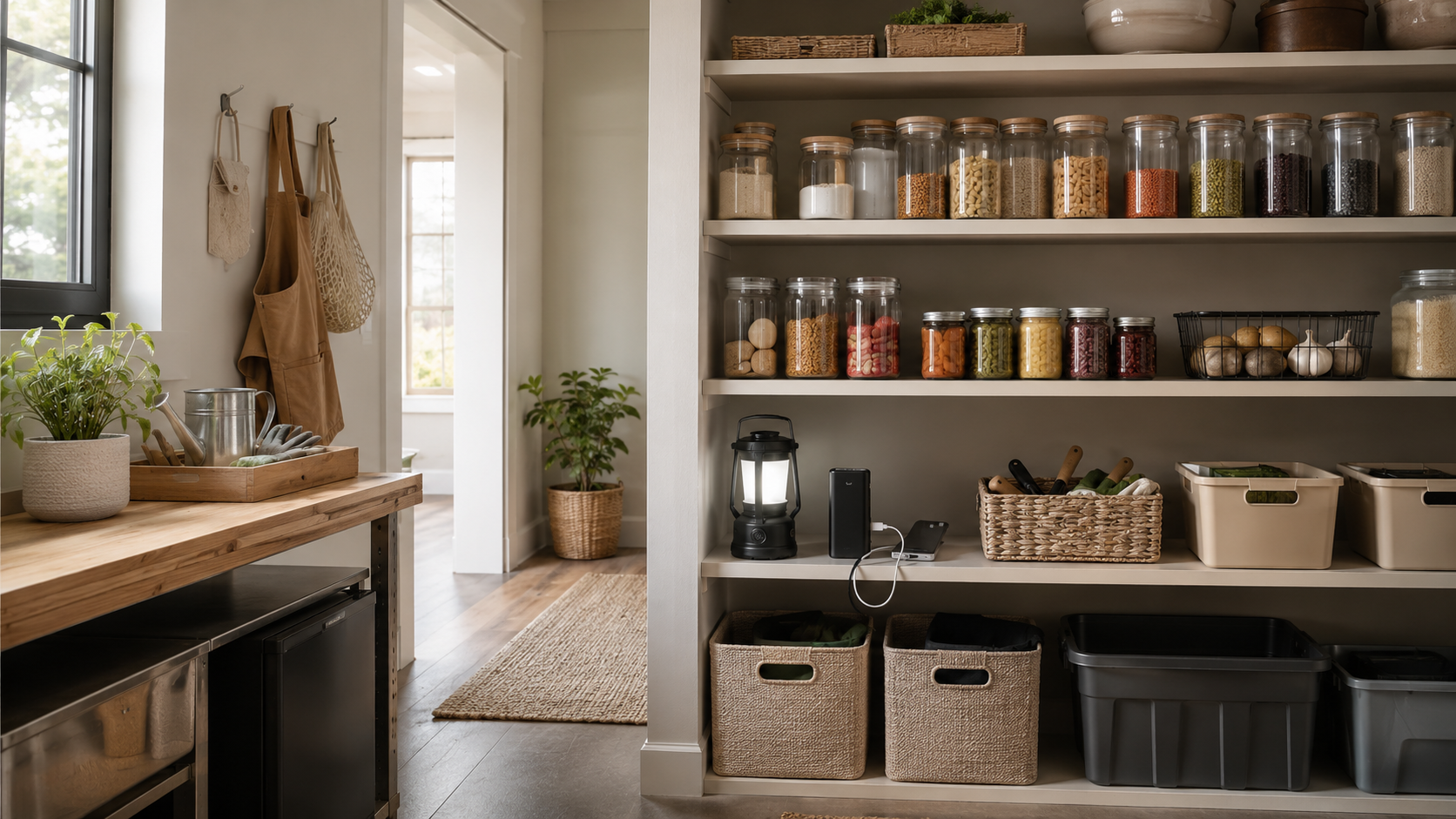
Start with foods the household already consumes. Keep one extra replacement of several frequently used shelf-stable items. Practice first in, first out — use older items first and place newer purchases behind them. The goal is a practical buffer, not extreme stockpiling.
5. Improve Your Household Water Plan
Know how much backup drinking water your household currently has, how it is stored, and how long it would realistically last. Consider safe storage, rotation, and at least one backup option. Water from any alternative source — including rainwater — should not automatically be assumed safe to drink without appropriate treatment and testing.
For detailed guidance, see our guides on emergency water supply for home and off-grid water systems.
6. Learn One Practical Homesteading Skill
Choose one repeatable skill: composting, seed starting, basic gardening, cooking from pantry staples, simple repairs, food preservation using authoritative safety guidance such as the National Center for Home Food Preservation, or water planning. Emphasize skills over buying equipment — a skill you actually use is worth more than a tool that sits unused.
7. Reduce Waste Before Adding More Systems
Practical ideas include composting appropriate scraps, using food before it expires, rotating pantry items, reusing suitable containers, and planning purchases before buying equipment. Reducing waste is often more valuable than adding complexity.
8. Prepare for Short Power Outages
Focus on basic household resilience: lighting, phone charging, communication, and identifying genuinely essential devices. Keep flashlights, lanterns, chargers, and spare batteries in one known location. Do not install electrical systems yourself, and do not buy oversized backup systems without first assessing your actual needs.
9. Add Animals or Larger Projects Slowly
Chickens, bees, greenhouses, larger gardens, structures, and water systems can add considerable time, maintenance, legal, and cost requirements. Master simpler systems first. Check local zoning, HOA rules, and regulations before taking on animals or building structures.
10. Build Your Homestead One Finished Project at a Time
One completed project is better than five unfinished projects. A simple progression might look like:
- Month 1: Inventory and planning
- Month 2: One growing project
- Month 3: Pantry and water improvements
- Then: Add one new skill or project at a sustainable pace
How Much Land Do You Need to Start Homesteading?
There is no single acreage requirement. It helps to distinguish between learning homesteading skills and trying to produce nearly everything a household consumes. These are not the same goal.
A small suburban yard can support useful food-growing and household self-reliance projects. Livestock and larger-scale food production require more space and may involve local restrictions. No specific acreage — whether a quarter acre or ten acres — guarantees self-sufficiency. What matters is matching your projects to your actual property, climate, and capacity.
How Much Does It Cost to Start Homesteading?
There is no single dollar amount, because cost depends entirely on the projects you choose. Beginner approaches can often start with existing household resources and inexpensive projects — seeds, soil, containers, a few extra pantry items, and basic water storage.
A practical approach:
- Inventory what you already have first
- Start with one project
- Buy only what solves a specific need
- Avoid purchasing large systems before understanding your requirements
Learning and planning can be more valuable than buying equipment immediately. The most expensive mistakes usually come from buying before understanding.
What Should a Beginner Homesteader Start With First?
A simple priority sequence:
- Assess what you already have
- Grow one useful food
- Improve water preparedness
- Create a small pantry buffer
- Learn one practical skill
- Add larger projects later
FIND YOUR BEST PLACE TO START
Take the Free 10-Minute Backyard Self-Reliance Checklist
Assess food, water, energy, storage, and practical skills and get a personalized place to begin.
Take the Free Checklist →7 Homesteading Mistakes Beginners Can Avoid
- 1Trying to do everything in the first year
- 2Growing food the household does not eat
- 3Buying equipment before identifying a need
- 4Ignoring local laws or HOA restrictions
- 5Taking on animals before understanding daily care
- 6Building systems that require more maintenance than expected
- 7Comparing a small beginner homestead with established homesteaders
Practical Safety Reminder
Want a Broader Collection of Homesteading Project Ideas?
Some readers prefer researching each subject separately. Others may prefer having many food, water, storage, backyard, and DIY concepts gathered into one resource. For readers interested in the second approach, Wellness Vital Tips has also reviewed The Self-Sufficient Backyard.
Read Our Self-Sufficient Backyard Review →Frequently Asked Questions
How do I start homesteading?
Start by assessing the home and space you already have, choosing one useful food-growing project, improving basic food and water preparedness, and learning one practical skill. Add larger systems gradually.
Can I start homesteading with a small backyard?
Yes. A small yard, patio, or similar space can support useful homesteading practices such as container gardening, raised beds, herbs, composting, pantry planning, and practical household skills.
How much land do I need to start homesteading?
There is no minimum acreage required to begin learning homesteading skills. The amount of land needed depends on what you want to grow, whether you plan to keep animals, and how much of your household's needs you want to produce yourself.
What should a beginner homesteader start with?
Start with one manageable system such as growing a food your household already eats, organizing a pantry buffer, improving household water preparedness, or learning a practical skill.
Do I need to buy a lot of equipment?
No. Beginners can often start with existing household resources and small projects. Buy equipment only after identifying a specific need and understanding how you will use and maintain it.
Should beginners start with chickens?
Not necessarily. Chickens require daily care, appropriate housing, ongoing costs, and compliance with local rules. Many beginners may benefit from first establishing simpler gardening, food, storage, or household systems.
Related Guides
Preparedness & Healthy Home
Practical guides for household water, backup resources, healthy-home systems, and everyday preparedness.
Read moreEmergency Water Supply for Home
Storage containers, rotation, treatment, filtration, and building a practical household backup plan.
Read moreOff-Grid Water System
Sources, storage, pumping, treatment, solar power, and backup for a home or cabin off the grid.
Read moreThe Self-Sufficient Backyard Review
An independent editorial review of a popular homesteading and self-reliance guide.
Read moreFind Your Easiest Next Step
Use the free 10-minute checklist to assess your household across food, water, energy, storage, and skills — and get a personalized place to start.
Take the Free Checklist →